Protecting inclusion in a changing world: A pragmatic approach to empower global talent and build career opportunity
03
July
2025
Championing inclusion in a rapidly changing world is an important – and complex – challenge. How do businesses adapt and protect an inclusive culture? How do they ensure it represents the people who work there – and allows the best talent to contribute and develop their careers?
For our latest Roundtable, we were delighted to welcome Claire Semple, Chief Talent and Inclusion Officer at Informa. Claire shared her insights into the way Informa has ensured that inclusion is outcome-focused, able to adapt to changing environments, and provides a “Great Home for Talent” in the organisation.
Career opportunity through internal mobility.
Informa connects businesses and professionals with knowledge all over the world. It is one of the world’s leading B2B events companies, as well as a leader in academic publishing. It’s a FTSE 100 business, had £3.5bn of revenues in 2024 and 14,600 colleagues, serving customers in over 150 countries.
To create a great colleague experience is critically important, but never easy. Over a third of Informa colleagues (36%) work in multi-country teams, and nearly as many (32%) are working in a structure that is new to them. This is because Informa’s highly entrepreneurial culture has resulted in multiple acquisitions and a 50% growth in headcount over the past 3 years.
Against this rapidly changing background, Informa has redoubled its focus on career opportunity and internal mobility for colleagues. What does this look like in practice, and what does it mean for building and protecting inclusivity?
It means three things …
1. Leading from the heart.
Informa’s inclusive culture is rooted in systematic listening and visible, values-led actions. A decade-long regular pulse survey attracts participation rates well above 90 per cent and generates a wealth of comments that translate directly into actions.
Informa has recently refreshed its focus on inclusivity, leadership and customer engagement. Progress is tracked rigorously, with three inclusion questions consistently scoring highly. And Informa has received recognition for its efforts, achieving third place in Glassdoor’s UK “Best Place to Work” list.
Leadership decisions are made through the dual lens of colleague and customer impact. These are supported by “safe-space” discussions – such as recent sessions for trans and non-binary colleagues – run by external facilitators to encourage candid feedback.
Claire highlighted that while Informa was a FTSE 100 organisation, it retained a strong entrepreneurial spirit. This means it sometimes deliberately “dances on the edge,” taking a calculated, risk-based approach to uphold inclusive principles, even when external protections are being eroded in key markets. This “heart-led” approach underpins trust and enables the business to act decisively, while keeping values intact.
2. Building a Great Home for Talent.
To deliver on its promise of career opportunity for colleagues, Informa has re-engineered their experience of internal mobility. Internal hiring has climbed from 22 percent to 43 percent in just two years, with a clear commitment to reach 50 percent by the end of this year.
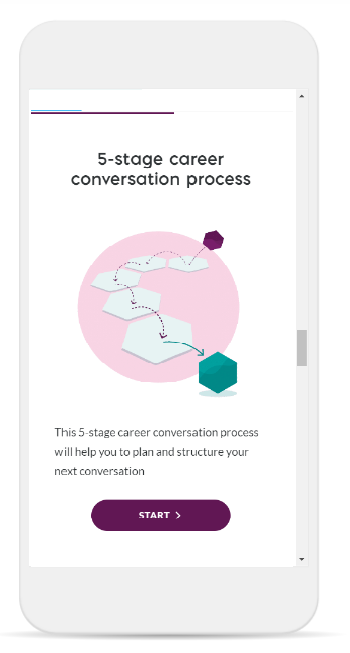
To help achieve this, function-based talent communities support jobseekers at the first point of application, providing peer networking, role visibility and career advice. And a four-stage career-conversation framework guides individual development plans. Structured succession planning has tripled the population identified as ready for broader responsibility.
Experiential programmes bring Informa’s career strategy to life, including:
- An “Informa Explore” job-shadowing pilot, which broadens functional understanding.
- A “Show Makers” scheme, which places volunteers on Informa exhibition floors worldwide, replacing temporary staff with brand ambassadors who return with fresh insight and new aspirations.
- Six global colleague-run networks – dating back to 2018 – which act as critical friends, testing ideas, shaping policy and amplifying under-represented voices.
Taken together, all of these initiatives open doors, deepen a sense of belonging and strengthen the talent pipeline, and turn the organisation into a “Great Home for Talent”.
3. Navigating, rather than shifting.
In a year of big political and regulatory change, Informa has opted for nuanced navigation, over wholesale shifts in approach. Early engagement with its executive committee, HR and legal teams confirmed that Informa’s “everyone included” principle required only minor tweaks – particularly in US hiring communications and event guidance – for it to remain globally compliant. Rather than splinter inclusion policies into regional variants, leaders decided to keep a single set of fundamentals.
There was some navigating to do: a company-wide demographic data survey was rescheduled for October’s annual Inclusion Month to accommodate US sensitivities, and they’ve upped support for the trans and non-binary community with a focus on providing spaces for everyone. Throughout, the organisation made calculated risks to maintain momentum on inclusion and talent mobility. The result was a pragmatic, consistent path that kept strategy intact while showing flexibility of execution to reflect new realities.
Our View
We are deeply impressed by the thoughtfulness and careful consideration running through Informa’s approach to inclusion, particularly in rapidly changing and often chaotic times. This is an essential lesson for all businesses to learn. And it makes a direct connection between inclusion and its positive impact on talent. The near doubling of the number of internal moves at Informa is an impressive result and speaks for itself.
It also aligns with our beliefs about career development at The Career Innovation Company. A clear career strategy builds and protects inclusion, creates a sense of belonging – and helps people to achieve at work.
Five questions to get you started.
The current external environment creates an opportunity to reinforce why inclusion is so important. How can all organisations adapt and protect their commitment to inclusivity?
Here are some key questions to give them a starting point.
- How do you believe your work on inclusion connects with your future business success?
- What evidence can you draw on to support this view?
- What is the intent of your work in this area; and what are your strategies aiming to achieve?
- How do you measure outcomes?
- How might you present your beliefs, goals and successes to your people and the outside world?
Ultimately, building and protecting an inclusive culture means creating an environment where everyone has a fair chance to succeed and develop their careers. And Informa has created an excellent template for others to follow.
This event has passed
Thank you to everyone who took part in this event. If you're interested in getting involved check if we have any future events planned.